About the Second Battle of Ueda
The Second Battle of Ueda was fought in 1600 (9th month, Keichō 5) at Ueda, Shinano Province. Sanada Masayuki and Nobushige, with barely 2,000 men, run rings around the 38,000 of Tokugawa Hidetada on his way to Sekigahara. The battle that made Hidetada late for the decisive clash, and the Sanada at their finest.
- Year
- 16009th month, Keichō 5
- Place
- Ueda, Shinano Province
- Era
- Azuchi–Momoyama period
The two armies
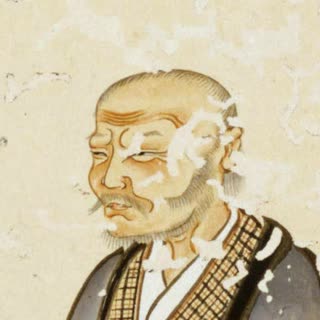 Sanada forces Commander-in-chiefSanada Masayuki 4,0004 units
 Troop strengthTotal of the units shown in 3D
Fought 36,000
Fought 4,000
Tokugawa forcesBy troop strength
- Tokugawa Hidetada 徳川秀忠 Commander-in-chief 15,000
- Ōkubo Tadachika 大久保忠隣 9,000
- Tokugawa Detachment 徳川別働隊 8,000
- Honda Masanobu 本多正信 4,000
Sanada forcesBy troop strength
- Sanada Masayuki 真田昌幸 Commander-in-chief 2,000
-
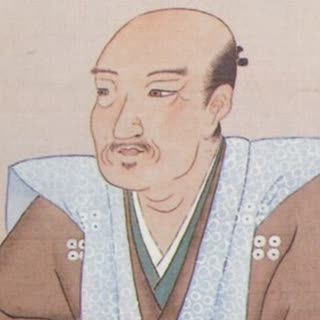 Sanada Nobushige 真田信繁 1,000
 - Sanada Ambush 真田伏兵 600
- Ueda Garrison 上田城兵 400
Portraits are public-domain images from Wikimedia Commons (some are later imagined depictions).
How the battle unfoldedTimes follow the 3D clock
- 6:00 AMCh. 1
MarchHidetada Comes to Ueda
The 9th month of Keichō 5. Tokugawa Hidetada's 38,000, marching west along the Nakasendō to Sekigahara, close on Ueda Castle, where Sanada Masayuki is holed up. The garrison numbers barely 2,000. By the numbers, it should not even have been a contest.
- 7:00 AMCh. 2
FeintThe Master of Double-Dealing
Masayuki first replies that he will surrender, buys time, and then, once his preparations are complete, abruptly refuses. Toyed with, Hidetada flies into a rage and orders an assault. The beginning of the gamesmanship of a man feared as "the master of double-dealing."
- 9:00 AMCh. 3
RiceHarvesting the Rice as a Lure
The Sanada calmly harvest rice right in front of the castle, taunting the Tokugawa. The hot-blooded vanguard charges deep into the castle town to punish them. But that was exactly the trap Masayuki had drawn.
- 11:00 AMCh. 4
AmbushSomeyadai Moves
An ambush party under Nobushige bursts from the flank at Someyadai, and the Sanada sally from the castle as well. Lured into the narrow castle town, the Tokugawa vanguard is caught between gunfire and a hedge of spears and collapses.
- 1:00 PMCh. 5
KangawaThe Kangawa Overflows
The routed Tokugawa crowd toward the Kangawa River on their line of retreat. The bridge has been washed away by the rising water, and armoured warriors are swallowed one after another by the torrent. The moment a small Sanada force dealt a heavy blow to the army of the realm.
- 3:00 PMCh. 6
StuckThe Castle Will Not Fall
Hidetada continues to fail against the castle and wastes day after day. From an exasperated Ieyasu come repeated orders: "March west at once." Ueda Castle never fell.
- 4:30 PMCh. 7
LateToo Late for the Decisive Battle
Hidetada at last abandons Ueda and force-marches west. But it is already too late: his main force of 38,000 misses the battle of Sekigahara on the 15th day of the 9th month. With this, the name of the Sanada, father and son, rang throughout the land.
In Ultra detailBattle Pass
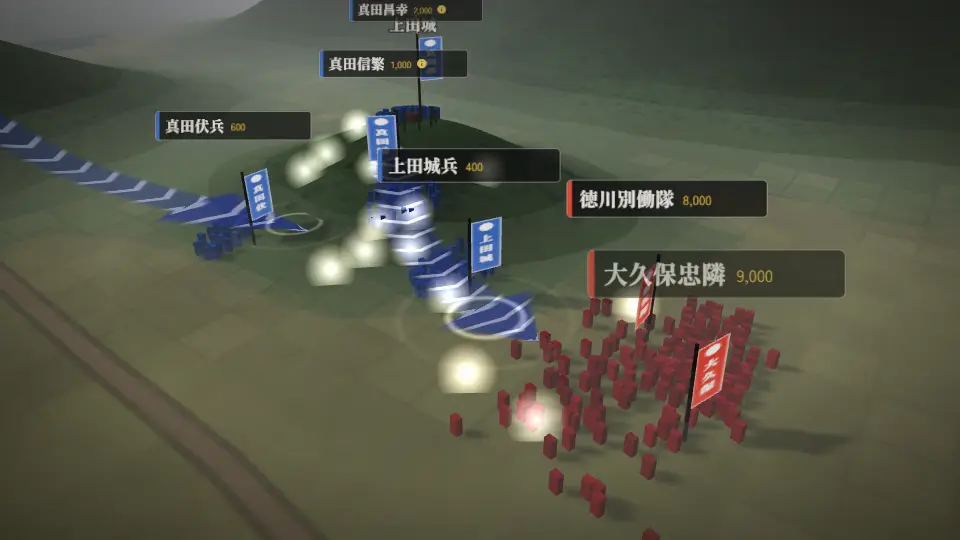
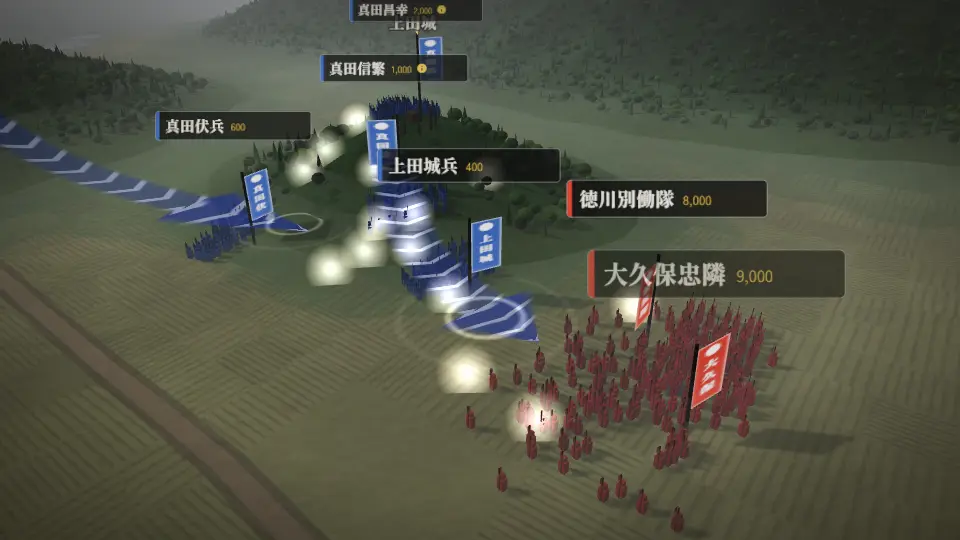
The same scene in the standard quality and in Ultra detail. Drag the line to compare, and switch between "Wide" and "Close-up". Ultra detail adds rugged mountains, forests and rocks in 3D, rippling seas and rivers, rows in the fields and soldiers as figures. Chapter 1 of every battle can be watched in Ultra detail without the Battle Pass.
FAQ
What was the Second Battle of Ueda?
Sanada Masayuki and Nobushige, with barely 2,000 men, run rings around the 38,000 of Tokugawa Hidetada on his way to Sekigahara. The battle that made Hidetada late for the decisive clash, and the Sanada at their finest.
When and where did the Second Battle of Ueda take place?
It took place in 1600 at Ueda, Shinano Province (9th month, Keichō 5).
Who fought in the Second Battle of Ueda?
Sanada Masayuki of the Sanada forces, Tokugawa Hidetada of the Tokugawa forces were among the commanders.
Can I watch the Second Battle of Ueda in 3D?
Yes. This page plays a free three-minute 3D animated overview showing the deployments, the movements of each army and how the battle was decided.